

Progress is not guaranteed. For nearly 300,000 years, it barely existed. Humans lived like their ancestors. They scavenged with the same stone tools. Half of the children did not reach the age of five. And most adults died before thirty. Then something fundamentally changed.
The ascent of Western Civilisation began 2,500 to 3,000 years ago in Ancient Greece. The Greeks began to think, question and challenge the ideas of the past without fear of reprisal. By unshackling themselves from mythological explanations, the creation of knowledge took off. A culture that encouraged critical thinking was essential for a dynamic society to emerge.
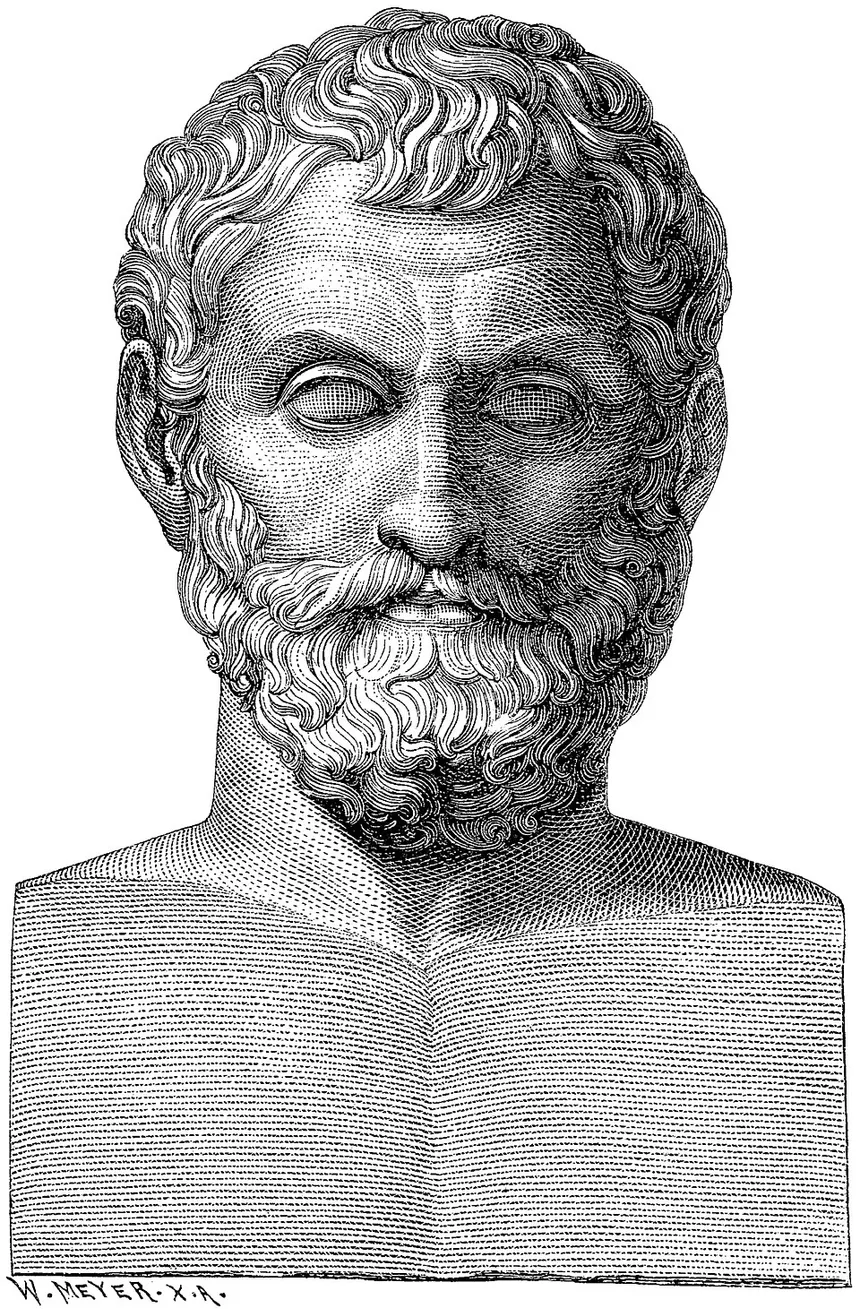
This tradition of criticism began with Thales of Miletus who in mid-6th century BC founded the Milesian School. What made his school unique was that students were encouraged to criticise and improve upon the ideas of the past. Bad ideas were rejected. Better ones replaced them.
This philosophical quest to better understand reality led to Athens' golden age. Progress could not have happened without it. A civilisation can't advance unless the ideas, values and principles it adheres to are grounded in reality.
Ideas that ignore reality can survive in theory, but not in practice. Evidence and reason are man's most powerful tools for discovering truth. When this principle was forgotten after Rome's fall, the West stagnated for a thousand years. When it was rediscovered in the Scientific Revolution and Enlightenment, progress exploded.
Today the West is fortunate to stand on the shoulders of giants—intellectuals who throughout the centuries, gradually and painstakingly moved human knowledge forward.
Ptolemy thought that Earth was at the centre. Copernicus proposed that the sun was. Galileo proved it through his telescope. Kepler perfected the orbital mechanics. And Newton explained gravity. Each improved on what came before. Knowledge refined across fifteen centuries.
With time, humanity’s understanding of reality improved across every field. The results are visible all around us—embedded in the high standards of living that we enjoy, and the technological advancements we now take for granted.
But progress is fragile, and never more than one generation away from extinction. Unfortunately, most people today don't know why civilisations rise and fall—or what makes Western Civilisation unique and worth preserving. That ignorance is dangerous. It leaves people vulnerable to ideas that are seductive but destructive. And democracy is only as strong as the ideas held by those who vote.
Good ideas create dynamism, wealth and prosperity. Bad ideas bring stagnation, poverty and decline. The West will regress unless its people can still tell the difference.
Worse still, many of our institutions have stopped championing the very ideas that built the West. Pride in our civilisational achievements is turning into self-contempt. Truth is giving way to postmodern relativism. Feelings now trump reason. Comforting lies are drowning out hard truths. Free speech is quietly being censored.
Meritocracy is being ditched for equity. High standards are being replaced by low expectations. Collectivism is overtaking individualism. Victimhood is prescribed instead of agency.
Regulations keep multiplying at the expense of innovation. An ever-growing bureaucracy is suffocating entrepreneurship. Fear of technology outweighs technological optimism. Zero-sum thinking is crowding out the infinite-sum mindset that built the West.
Each substitution may seem minor. Together they dismantle the conditions that made progress possible. Reforming our institutions may be too difficult. Change has to come from the outside. Bottom-up, not top-down. Antifragility through decentralisation.
This is the Western Accel mission. To spread the ideas that built the modern world. To make the case that the future can be extraordinary. The beginning of infinity is still within reach. But only if more people choose to fight for it.
If you wish to support the mission 🙏